AI Fashion Photoshoot: Cost Reduction for Small Businesses and Boutiques
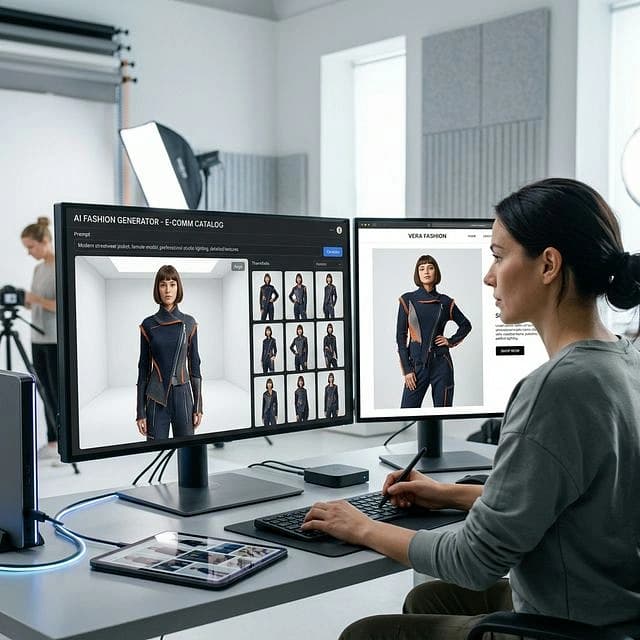
For many small fashion businesses, launching a new clothing collection comes with a significant challenge: producing high-quality marketing visuals without exceeding the budget.
Fashion is an industry built on visual storytelling. Customers want to see how garments look, how fabrics move, and how clothing fits on real people before making a purchase decision. Because of this, fashion brands traditionally invest heavily in professional photoshoots.
However, professional photoshoots require multiple resources including photographers, models, studio spaces, lighting equipment, stylists, and post-production editing.
For large brands, these expenses are often part of the marketing process. For small fashion businesses and startups, the cost of producing professional photos can quickly become overwhelming.
Artificial intelligence is beginning to change the way fashion visuals are produced. AI-powered image generation tools now allow brands to create professional-looking fashion images without organizing traditional photoshoots.
Instead of relying entirely on physical production, brands can generate digital fashion visuals using artificial intelligence. This shift allows small businesses to reduce marketing costs while still maintaining strong visual presentation.
As digital commerce continues to expand, AI fashion photography is becoming an important tool for small brands that want to compete in modern online retail.
Why Traditional Fashion Photoshoots Are Expensive
Fashion photoshoots involve several stages of production, each contributing to the overall cost.
First, brands must hire professional photographers who specialize in fashion imagery. Experienced photographers often charge significant fees depending on the complexity of the shoot.
Next, fashion brands typically hire models who represent the clothing. Model fees vary based on experience, location, and usage rights.
Studio rental is another cost factor. Professional studios provide lighting equipment, backdrops, and staging environments that help produce high-quality images.
In addition, styling teams may be required to prepare outfits and coordinate visual presentation.
Finally, once the photoshoot is complete, images often require editing and retouching before they are ready for ecommerce websites or marketing campaigns.
When these elements are combined, even a small photoshoot can cost thousands of dollars.
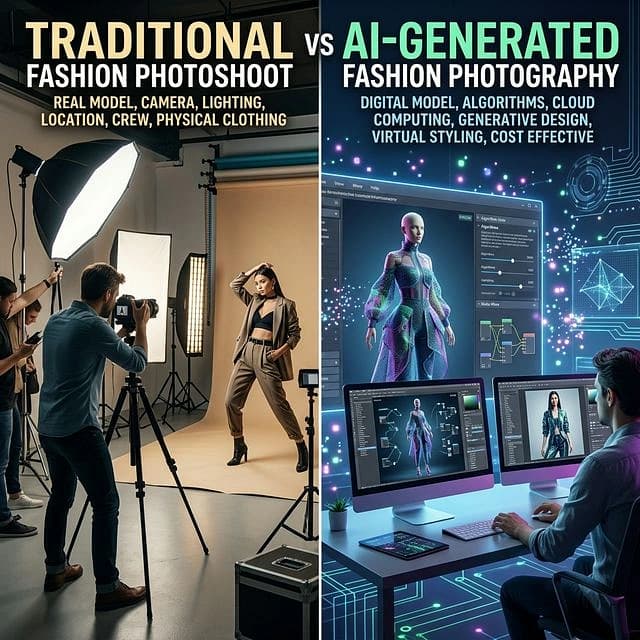
For small fashion businesses producing new products regularly, repeating this process for every collection can significantly impact marketing budgets.
What Is AI Fashion Photography?
AI fashion photography refers to the use of artificial intelligence to generate or enhance clothing product images digitally.
Instead of capturing photographs through traditional cameras, AI systems create visuals using machine learning models trained on large datasets of images.
These systems analyze garment photos or product data and generate realistic fashion visuals that resemble professional studio photography.
AI-generated fashion images may include:
- digital fashion models wearing garments
- automatically generated backgrounds
- styled product presentations
- enhanced lighting and visual effects
The result is a digital image that appears similar to a professionally produced fashion photograph but is generated using artificial intelligence.
How AI Reduces Fashion Photoshoot Costs
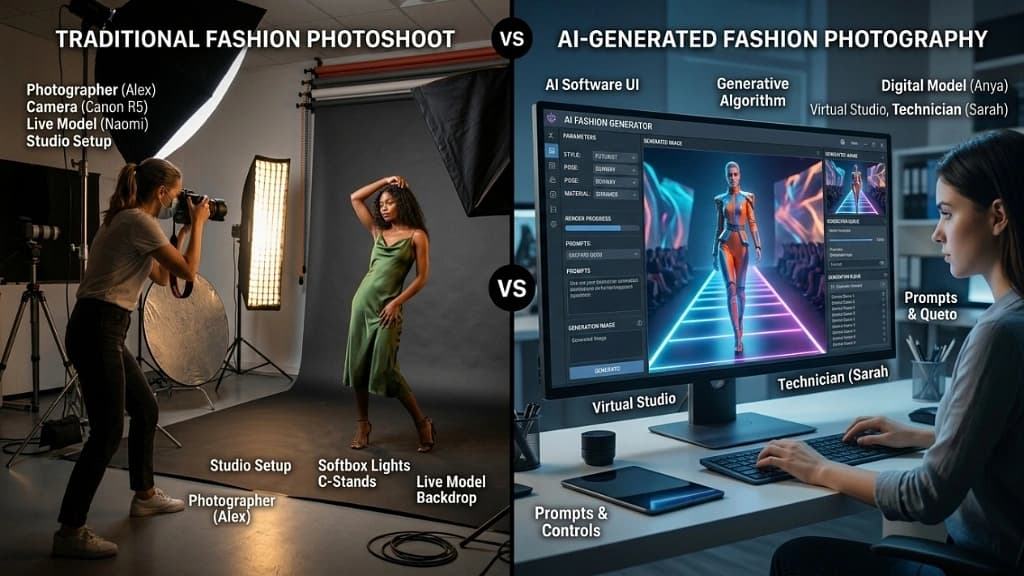
Artificial intelligence reduces photoshoot costs by replacing several expensive parts of traditional fashion production.
Digital Fashion Models Instead of Hiring Models
One of the largest expenses in fashion photoshoots is hiring professional models.
AI tools can generate digital models that display clothing in realistic poses.
These digital models can represent different body types, poses, and styling contexts without requiring physical casting or scheduling.
This allows fashion brands to showcase garments visually without paying model fees for every shoot.
A real example of technology that supports digital body modeling is 3DLOOK, which uses AI to generate accurate body measurements and digital representations for fashion applications.
AI-Generated Backgrounds Instead of Studio Rentals
Studio rental and location scouting can also be expensive.
AI image generation tools can create realistic studio environments, lifestyle backgrounds, or outdoor scenes digitally.
Fashion brands can experiment with different visual settings without renting physical locations.
For example, visual commerce platforms such as Vue.ai help fashion retailers automate product imagery and enhance visual presentation for online stores.
Automated Image Editing
Image editing and retouching are essential parts of fashion photography.
AI-powered editing tools can automatically adjust lighting, remove imperfections, and enhance image quality.
This reduces the need for extensive manual editing, saving both time and production expenses.
Platforms like Runway provide AI creative tools that allow designers and marketers to generate and refine visuals using machine learning.
Real Example: Generative AI Image Technology
Another organization contributing to AI image generation research is Stability AI, which develops generative models used for creating digital images through artificial intelligence.
Their technologies support the development of visual generation tools that creators use for digital content production.
These platforms demonstrate how generative AI is becoming part of modern creative workflows.
Benefits of AI Fashion Photography for Small Businesses
AI-powered fashion photography offers several benefits for small brands and independent designers.
Lower Marketing Costs
The most obvious advantage is cost reduction.
AI tools eliminate many traditional production expenses such as studio rentals, model fees, and photography equipment.
For small businesses with limited marketing budgets, this can make professional product imagery far more accessible.
Faster Content Creation
Traditional photoshoots require planning, scheduling, and editing.
AI tools can generate visuals much faster, allowing brands to produce marketing content quickly.
This speed is particularly valuable for fashion businesses that release new collections frequently.
Scalable Product Photography
Ecommerce brands often manage hundreds of product listings.
Producing traditional photoshoots for every product would be extremely difficult.
AI generation tools allow brands to scale visual production across large catalogs.
Creative Flexibility
AI tools allow brands to experiment with different visual styles without increasing production costs.
Designers can test different backgrounds, lighting setups, or styling approaches digitally.
This flexibility can help brands develop more creative marketing campaigns.
Real Example: AI in Fashion Content Workflows
Many creative teams are now using AI tools during the early stages of content production.
Instead of organizing full photoshoots immediately, designers may generate visual concepts using AI tools to explore styling ideas and presentation formats.
Once the team identifies the best concepts, they can decide whether traditional production is necessary.
This hybrid approach helps brands reduce unnecessary production expenses.
Challenges Brands Should Consider
Despite its advantages, AI fashion photography is still evolving.
One challenge is ensuring that AI-generated visuals accurately represent the real product.
If generated images differ significantly from the actual garment, customers may feel misled.
Brands must also consider how AI-generated visuals fit within their brand identity.
Some companies may prefer a combination of traditional photography and AI-generated visuals to maintain authenticity.
The Future of AI in Fashion Content Creation
AI technology is advancing rapidly, and visual generation tools are becoming more sophisticated.
Future AI systems may allow fashion brands to generate entire marketing campaigns automatically.
These tools could produce product imagery, promotional visuals, and social media marketing content with minimal manual effort.
For small businesses, this development could significantly reduce the barriers to producing high-quality marketing visuals.
Instead of competing with large brands through expensive production budgets, smaller companies may compete through creativity and smart use of technology.
Key Takeaways
Artificial intelligence is transforming how fashion brands produce marketing visuals.
By reducing the need for traditional photoshoots, AI tools allow small businesses to create professional-quality product images at lower cost.
Small fashion brands benefit from faster content production, scalable visual creation, and greater creative flexibility.
Platforms such as Runway, Vue.ai, 3DLOOK, and Stability AI demonstrate how artificial intelligence is reshaping digital visual production.
For small fashion businesses navigating the competitive world of ecommerce, AI-powered fashion photography offers a new way to create strong marketing content without large production budgets.