Benefits of AI Try-On for Saree, Kurti, and Lehenga Sellers: A Complete Guide for Ethnic Fashion E-Commerce
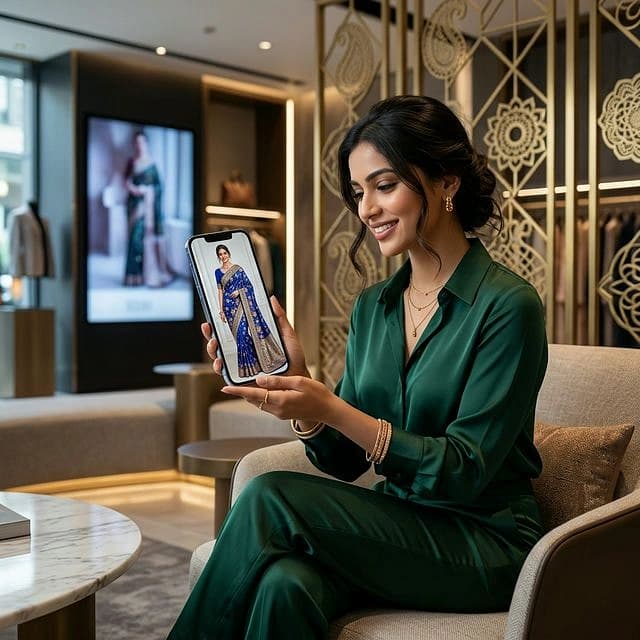
The global ethnic fashion market has grown rapidly as more shoppers turn to online platforms for traditional clothing. Sarees, kurtis, and lehengas are no longer purchased only from local boutiques or physical stores. Today, customers explore thousands of designs online before choosing the perfect outfit for weddings, festivals, or everyday wear.
However, selling ethnic clothing online presents a unique challenge.
Unlike many Western garments, traditional outfits rely heavily on draping, body fit, and visual styling. A saree can look completely different depending on how it is draped. A lehenga’s appeal depends on how the skirt flares and how the blouse fits. Even a kurti can appear different based on the wearer’s height and body shape.
When customers shop online, they often struggle to imagine how these garments will look when worn.
Because of this uncertainty, many shoppers hesitate before purchasing. Some abandon their carts, while others buy the outfit but later return it if it does not match their expectations.
Artificial intelligence is beginning to solve this challenge through AI try-on technology.
Virtual try-on tools allow customers to digitally preview how clothing might look on their bodies before purchasing. For ethnic fashion sellers, this technology is quickly becoming a powerful tool for improving customer confidence and increasing online sales.
Why Selling Ethnic Wear Online Is More Complex Than Other Clothing
Traditional garments involve more visual and structural complexity than many modern clothing items.
Sarees are not simply worn; they are styled through draping techniques that vary across regions and cultures.
Lehengas consist of multiple elements such as the skirt, blouse, and dupatta. Each piece contributes to the overall look of the outfit.
Kurtis vary widely in length, cuts, sleeve styles, and fabrics.
Because of these variables, customers often ask questions such as:
- Will the saree drape well on my body shape?
- Will the lehenga skirt flare properly?
- Will the kurti length suit my height?
When customers cannot answer these questions, they hesitate to purchase.
AI try-on technology addresses this uncertainty by allowing customers to see how the outfit may appear when worn.
What Is AI Try-On Technology?
AI try-on technology allows shoppers to digitally preview clothing using artificial intelligence and computer vision.
Instead of imagining how an outfit might look, customers can see a realistic simulation of the garment on their body or on a digital avatar that reflects their proportions.
The technology analyzes body measurements and garment structure to generate a visual preview of the outfit.
For ethnic fashion sellers, this means shoppers can visualize how sarees drape, how kurtis fit the torso, and how lehengas appear when worn.
This visualization significantly improves the online shopping experience.
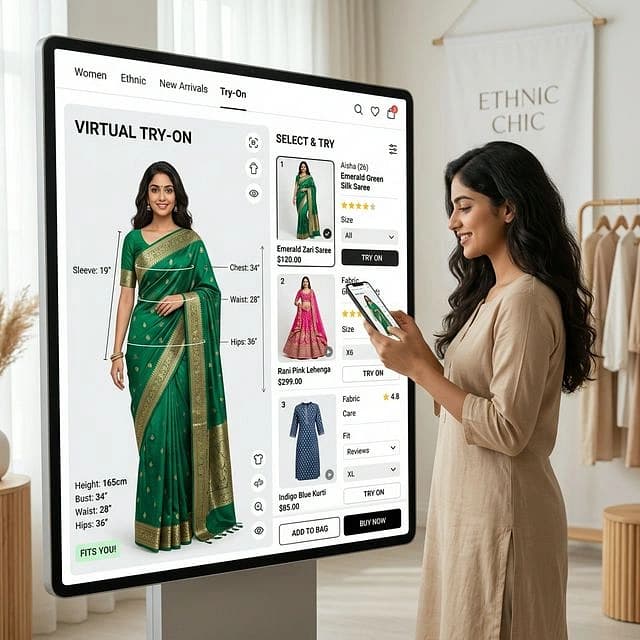
How AI Try-On Works for Sarees and Lehengas
The process of creating a realistic digital ethnic wear simulation follows four key technological steps:
- Body Detection: AI scans the customer’s image to estimate measurements like shoulder width, waist size, and height.
- Garment Digitization: The system processes high-resolution images of sarees, lehengas, or kurtis.
- Pattern Simulation: For sarees, it simulates draping and folds; for lehengas, it recreates the skirt flare and blouse structure.
- Visual Rendering: The AI combines the body data and garment physics to generate a realistic life-like preview.
Customers can then explore how the garment may appear when worn before making a purchase decision.
Real Example: Reactive Reality Virtual Try-On Technology
One of the companies developing advanced virtual try-on technology for fashion retailers is Reactive Reality.
The company focuses on creating digital fitting experiences that allow shoppers to visualize clothing on digital avatars. Their technology enables fashion brands to offer virtual try-on features directly within online stores.
Retailers using such technology can provide a more interactive shopping experience that helps customers understand how clothing will appear when worn.
This type of solution can be especially valuable for ethnic fashion sellers who want to demonstrate garment draping and fit digitally.
Real Example: AI Body Measurement Technology by 3DLOOK
Another technology supporting virtual try-on experiences is developed by 3DLOOK.
The company provides AI-powered body scanning technology that estimates customer measurements using smartphone images.
Retailers can use this data to recommend better garment sizes and improve the accuracy of virtual try-on simulations.
More specifically, their mobile body scanning solution allows customers to generate accurate body measurements at home.
For ethnic fashion sellers, this technology can help customers choose better-fitting kurtis or lehenga blouses.
Another platform contributing to AI-driven fashion retail is Vue.ai.
Vue.ai develops artificial intelligence tools for fashion retailers, including automated product tagging, personalization systems, and visual commerce tools that improve how clothing products are presented online.
Retailers use these technologies to enhance digital shopping experiences and improve product discovery.
While not limited to virtual try-on alone, these AI systems demonstrate how fashion retailers are using artificial intelligence to improve online shopping experiences.
Key Benefits of AI Try-On for Saree, Kurti, and Lehenga Sellers
- Increased Customer Confidence: Shoppers can see how an outfit looks on them, making them feel more comfortable about the purchase.
- Higher Conversion Rates: Visualizing fit and drape directly translates into more completed checkouts.
- Reduced Return Rates: Clear expectations about size and fit minimize the number of returns due to fit issues.
- Engaging Experience: Virtual try-on transforms passive browsing into an interactive, fun, and memorable shopping journey.
- Stronger Brand Loyalty: Providing high-tech solutions builds trust and encourages repeat purchases from ethnic fashion brands.
Increasing Conversion Rates in Ethnic Fashion E-Commerce
Conversion rate is one of the most important metrics for online retailers.
When shoppers hesitate during the purchase process, retailers lose potential revenue.
AI try-on technology helps address this issue by reducing uncertainty during the decision-making process.
For expensive garments such as wedding lehengas or festive sarees, visualization can significantly influence the customer’s final decision.
When customers feel confident about how the outfit may look, they are more likely to complete the purchase.
Reducing Return Rates for Ethnic Garments
Product returns are one of the biggest operational challenges for clothing retailers.
Processing returns involves shipping costs, inventory management, and product inspection.
Ethnic garments can be particularly challenging because many items include delicate embroidery, layered fabrics, and detailed craftsmanship.
AI try-on technology helps reduce returns by aligning customer expectations with the final product.
When customers preview how the outfit might appear before purchasing, they make more informed decisions.
The Future of AI Try-On in Ethnic Fashion
As artificial intelligence continues to evolve, virtual try-on technology will become more advanced and accessible.
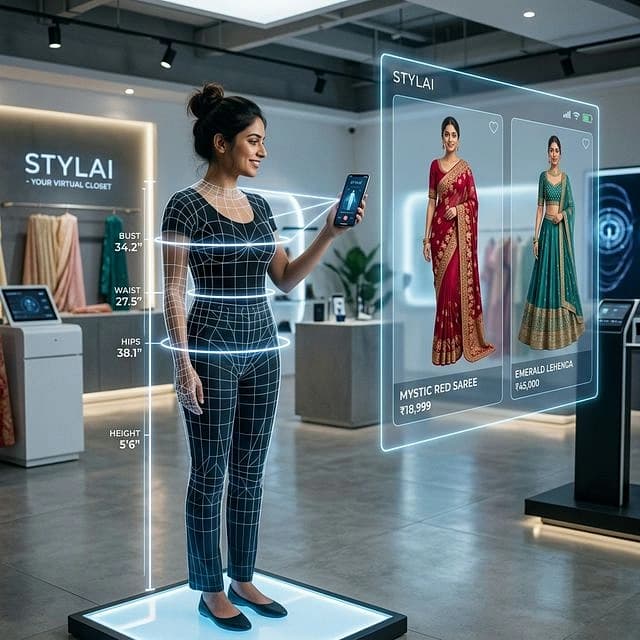
Future systems may allow customers to create personalized digital avatars that match their exact body measurements.
Retailers may also integrate AI styling assistants that recommend matching jewelry, dupattas, or accessories for complete ethnic outfits.
For saree, kurti, and lehenga sellers, these innovations could transform how customers discover and purchase traditional garments online.
The experience of trying clothing may soon become as immersive online as it is in physical stores.
Key Takeaways for Ethnic Fashion Sellers
AI try-on technology is transforming the way traditional garments are sold online.
Customers gain confidence when they can visualize sarees, kurtis, and lehengas before purchasing.
Retailers benefit from higher conversion rates and reduced return costs.
Technology platforms such as Reactive Reality, 3DLOOK, and Vue.ai demonstrate how artificial intelligence can improve online fashion retail.
For ethnic fashion sellers looking to grow their online presence, adopting AI-powered try-on technology may become an important step toward creating more engaging and trustworthy shopping experiences.
The craftsmanship of traditional fashion may remain timeless, but the way customers experience these garments is evolving rapidly in the digital era.