AI Try-On for Sarees: The Ultimate Solution for Draping Issues
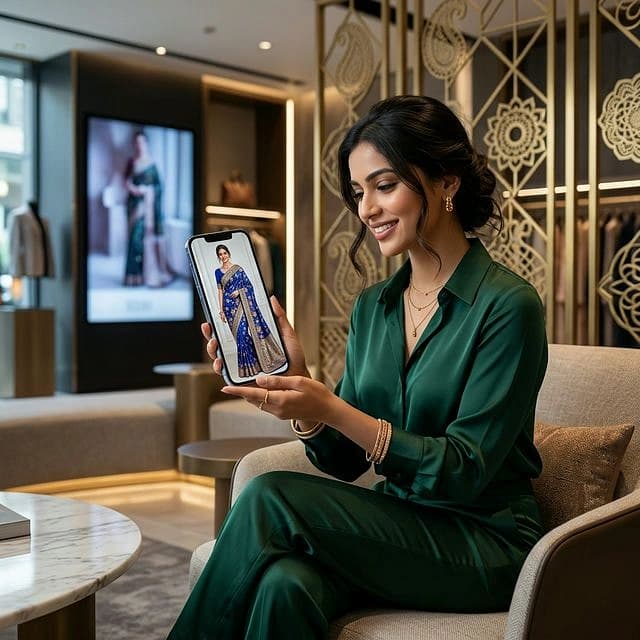
Selling sarees online has always required customers to make a decision based largely on imagination.
A shopper browsing an ecommerce store may admire the embroidery, fabric, and color of a saree. Yet one question often remains unanswered.
“How will this saree actually look when I wear it?”
Unlike many western garments, sarees are draped rather than stitched. The final appearance depends heavily on how the fabric wraps around the body, how the pleats fall, and how the pallu flows.
Because of this, traditional product photos often fail to fully communicate how a saree will look when worn.
This uncertainty creates hesitation during the buying process.
Some customers abandon the purchase altogether. Others buy the saree but later return it because the final look differs from what they imagined.
AI try-on technology is beginning to address this challenge.
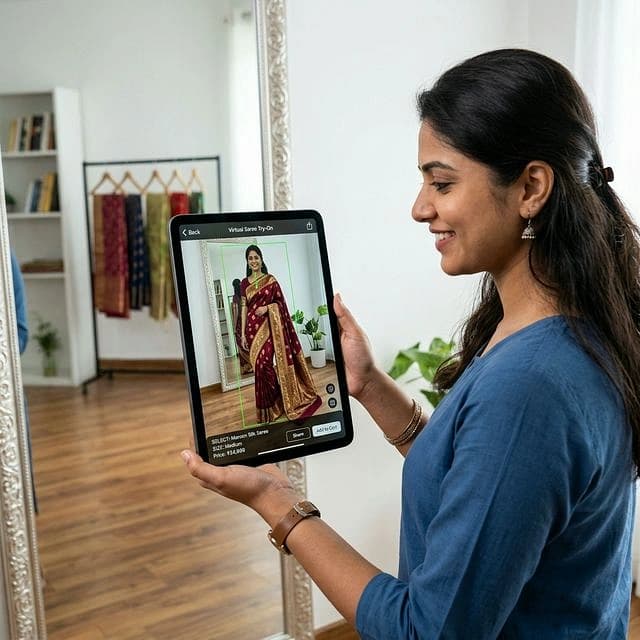
Virtual try-on tools allow customers to preview garments digitally before making a purchase. Instead of relying only on static product images, shoppers can see how a saree may look on a digital model or avatar.
For fashion sellers, this technology offers an opportunity to improve customer confidence, reduce product returns, and create more engaging shopping experiences.
What Is AI Try-On Technology?
AI try-on technology allows shoppers to visualize clothing digitally before buying.
Instead of only viewing catalog photos, customers can see garments displayed on digital models or avatars.
These systems combine several technologies.
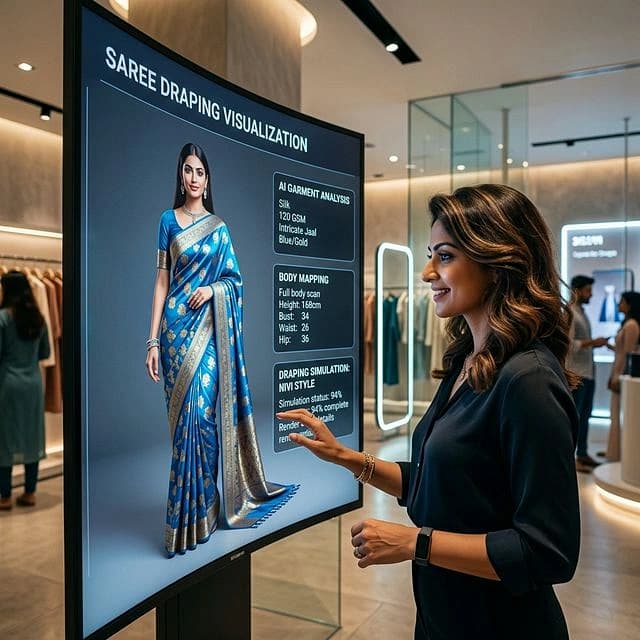
Artificial intelligence analyzes garment images and identifies details such as fabric patterns, borders, and textures.
Computer vision algorithms detect body proportions and positioning.
Generative AI then simulates how the garment would appear when draped on a model.
The result is a realistic preview that resembles a fitting-room experience.
Some platforms allow users to create avatars based on their body measurements. Others allow shoppers to upload their own photo to preview garments on themselves.
This interactive experience helps customers better understand how clothing might look when worn.
Why Saree Sellers Are Exploring AI Try-On
Online saree sellers face unique challenges compared with other fashion categories.
Customers cannot touch the fabric.
They cannot see how the saree drapes on their body.
And they cannot test styling variations before buying.
AI try-on technology helps solve these issues by improving garment visualization.
There are several reasons fashion sellers are exploring this technology.
First, it increases purchase confidence. When shoppers can visualize garments more clearly, they feel more comfortable buying them.
Second, it may reduce product returns. Many ecommerce returns occur because customers feel the product looks different than expected.
Third, virtual try-on increases engagement on product pages.
According to research by McKinsey, generative AI technologies are expected to significantly influence fashion retail and digital shopping experiences.
How AI Try-On Works for Sarees
AI try-on systems usually follow several steps.
First, the retailer uploads product images of the saree.
The AI analyzes the garment’s design elements such as color patterns, borders, and textures.
Next, the system selects a digital model or avatar.
Advanced algorithms simulate how the saree drapes around the model’s body.
The AI then generates a visual preview showing how the saree appears when worn.
Customers browsing the ecommerce store can interact with this preview and see how the garment may look.
Some platforms also allow shoppers to test different body types or avatars.
This makes the experience more personalized.
Real Example: AI Try-On Technology in Online Shopping
Virtual try-on technology is already being explored by large technology companies.
For example, Google introduced an AI-powered virtual try-on feature in its shopping platform.
This tool allows users to see clothing displayed on models with different body types rather than relying on a single product image.
This innovation helps shoppers visualize clothing more realistically and demonstrates how AI is transforming digital fashion retail.
Real Example: AI Visualization in Fashion Ecommerce
Another example of AI visualization technology comes from online fashion marketplaces.
Some ecommerce platforms are experimenting with AI-generated fashion models to display clothing across diverse body types.
For example, Levi’s announced that it was exploring the use of AI-generated models created by Lalaland.ai to showcase clothing more inclusively.
This development was reported by The Verge.
The initiative aimed to increase representation in fashion imagery while improving production efficiency.
Although this example focuses on AI models rather than sarees specifically, it demonstrates how fashion brands are experimenting with AI-driven visualization tools.
How Saree Sellers Can Implement AI Try-On
Fashion retailers can adopt AI try-on technology in several ways.
One approach is model-based try-on.
Customers can preview sarees on digital models representing different body types.
Another option is avatar-based try-on.
Customers create a digital avatar using their body measurements and preview garments on that avatar.
Some platforms offer photo-based try-on.
Customers upload their own image and the system generates a preview of the saree on their body.
Retailers can also use AI-generated try-on images to enhance product pages.
Instead of displaying only one catalog image, they can show multiple variations of the saree worn by different models.
This provides customers with a better understanding of the garment.
Benefits of AI Try-On for Saree Ecommerce
Virtual try-on technology offers several advantages for online fashion retailers.
One important benefit is improved purchase confidence.
When shoppers can visualize garments more realistically, they are more likely to complete their purchase.
Another advantage is reduced return rates.
Customers who understand how a product looks before buying are less likely to return it.
AI try-on also increases engagement.
Interactive product previews encourage shoppers to explore more products in the catalog.
Finally, retailers that adopt innovative technologies often strengthen their brand image as forward-thinking ecommerce businesses.
The Future of AI Try-On for Ethnic Fashion
AI try-on technology is still evolving, but its potential for ethnic fashion is significant.
Future systems may simulate saree draping with greater accuracy.
Customers may generate realistic avatars using smartphone body scanning.
Retailers may allow shoppers to experiment with different draping styles digitally.
Some platforms may even allow users to preview complete outfits including sarees, blouses, and accessories.
As these technologies improve, virtual try-on experiences may become a standard feature in online saree stores.
Fashion sellers who adopt these tools early may gain a strong advantage in digital retail.
Key Takeaways
AI try-on technology is transforming how sarees are presented in online stores.
Instead of relying only on static product photos, retailers can create interactive experiences that help customers visualize garments before purchasing.
This technology increases customer confidence and encourages deeper engagement with product collections.
It also helps reduce return rates by giving shoppers a clearer understanding of how garments will look when worn.
For saree sellers looking to improve ecommerce performance, AI try-on tools represent a powerful opportunity.
The most effective next step is to experiment with available virtual try-on technologies and observe how customers interact with the experience.
Retailers who adopt these innovations early may help shape the future of online ethnic fashion retail.
Online saree retail is evolving quickly.
The brands that help customers visualize garments more clearly will stand out in an increasingly competitive market.
AI try-on technology is one of the innovations making that transformation possible.