What Is AI Virtual Try-On and How Does It Work for Garment Sellers? A Complete Guide for Fashion E-Commerce
Online fashion retail has grown dramatically over the past decade. Consumers now browse, compare, and purchase clothing from their phones and laptops without ever stepping inside a physical store.
Yet one major challenge continues to affect online clothing businesses: customers cannot physically try garments before buying them.
When shoppers purchase clothing online, they rely on product photos, size charts, and descriptions. But clothing fit is deeply personal. A jacket that looks perfect in a product image may feel tight in the shoulders, or a dress might drape differently on different body types.
Because of this uncertainty, apparel consistently ranks among the most returned product categories in e-commerce.
This is where AI Virtual Try-On technology is transforming the fashion retail experience.
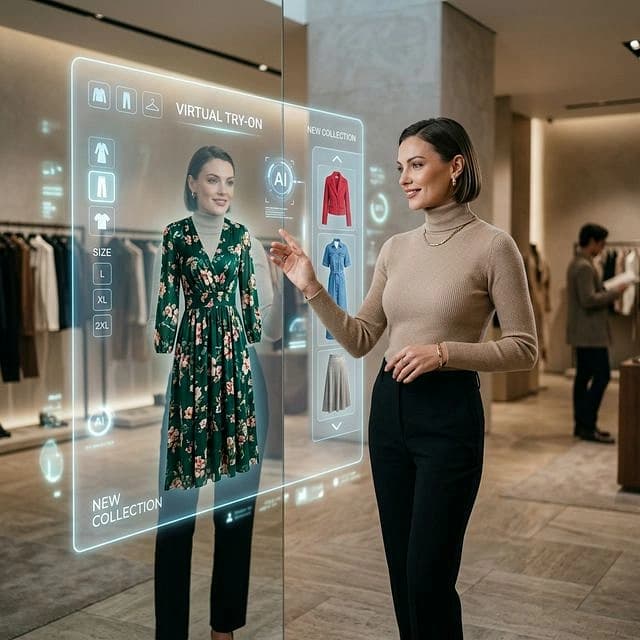
Instead of guessing how clothing will fit, customers can digitally try garments using artificial intelligence and computer vision. The system allows shoppers to visualize how clothing may appear on their own body before making a purchase decision.
For garment sellers, this technology reduces uncertainty, improves shopping confidence, and creates a more immersive digital retail experience.
In this guide, we explore what AI virtual try-on is, how it works, and how real companies are already using it to improve online fashion shopping.
Understanding AI Virtual Try-On Technology
AI virtual try-on refers to a system that allows customers to digitally preview clothing using artificial intelligence, machine learning, and computer vision.
The technology analyzes a customer’s body shape and overlays a digital version of a garment to simulate how it might look when worn.
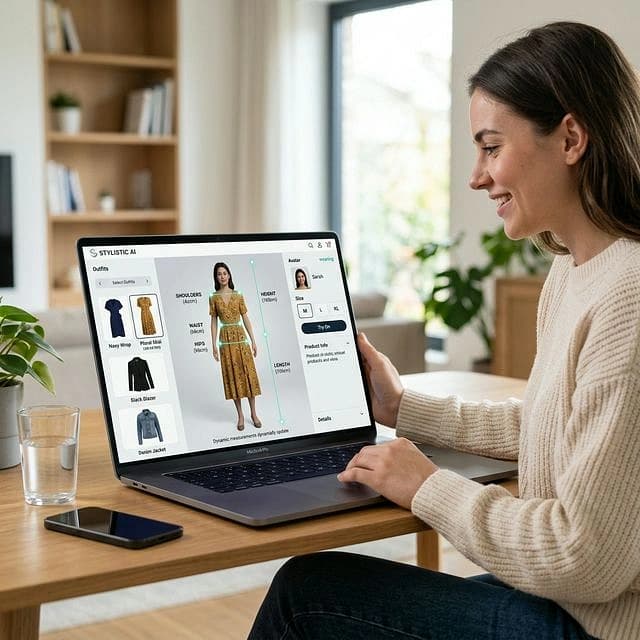
Instead of relying on imagination, shoppers can see a realistic preview of clothing on their own body or on a digital avatar that reflects their proportions.
For online garment sellers, this bridges the biggest gap between traditional retail and e-commerce: the ability to try clothes before purchasing them.
Why AI Virtual Try-On Matters for Garment Sellers
- Reduces Fit Uncertainty: Helps shoppers visualize garments on their propios body type.
- Decreases Return Rates: Minimizes 'bracket ordering' (buying multiple sizes to return most).
- Improves Conversion: Boosts shopper confidence, leading to faster purchase decisions.
- Operational Efficiency: Lowers the high costs associated with logistics and restocking returns.
How AI Virtual Try-On Works Behind the Scenes
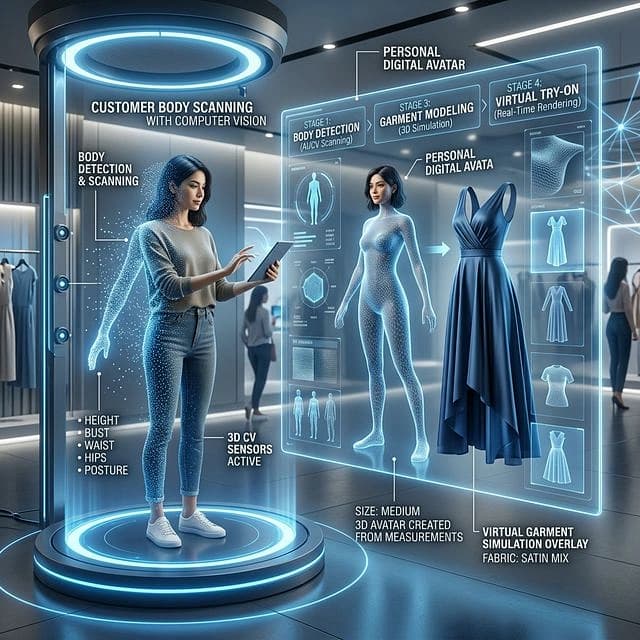
The magic of digital fitting happens through a sophisticated technology workflow:
Step One: Body Detection and Measurement
The system first analyzes the shopper’s body using computer vision technology.
Artificial intelligence detects key body points such as shoulders, waist, hips, and height. These measurements help the system estimate the user’s body proportions.
Instead of requiring manual measurements, the AI can estimate body dimensions automatically based on the visual data from images or a camera feed.
This process creates a digital body model that the system uses for garment fitting simulations.
Step Two: Digital Garment Modeling
Next, the clothing item itself must be digitized.
Fashion retailers upload detailed information about each garment, including fabric type, garment structure, stitching, and dimensions.
This data allows the AI system to understand how the clothing behaves when worn.
For instance, a soft knit sweater will drape differently compared with a structured blazer made from thick fabric. Accurate garment modeling helps the simulation appear realistic.
Step Three: Garment Simulation
Once the system understands both the customer’s body model and the garment structure, it simulates how the clothing would fit.
Physics-based algorithms determine how the garment folds, stretches, and moves on the digital body.
This step generates a realistic preview of how the garment may appear when worn.
Customers can rotate the view, explore different angles, and compare multiple outfits instantly.
Step Four: Real-Time Rendering
The final step involves generating the visual output the customer sees.
Advanced rendering engines combine the body model and garment simulation to produce a realistic image.
This output appears in real time, allowing customers to try different clothing items quickly without leaving the product page.
Real-World Examples of AI Virtual Try-On Technology
Several technology companies are actively developing virtual try-on platforms for fashion retailers.
One example is Zyler, a company that provides digital try-on tools for fashion brands. Their platform allows customers to upload a photo and visualize how clothing may look on their body.
Another company working on virtual try-on technology is Reactive Reality, which focuses on high-precision garment simulation tools designed for fashion retailers.
AI body measurement technology is also being developed by 3DLOOK, which enables retailers to estimate customer measurements using smartphone images.
Their platform helps clothing brands improve size recommendations and reduce returns.
Real Example: Online Fashion Retailers Reducing Returns
One of the biggest motivations for adopting virtual try-on technology is reducing product returns.
Size uncertainty is responsible for a large percentage of clothing returns in e-commerce.
Companies like 3DLOOK have published research showing how body scanning technology can improve sizing accuracy for online shoppers.
Their technology allows retailers to estimate body measurements using smartphone photos, helping customers choose better-fitting garments.
When customers choose the correct size the first time, retailers avoid the costs associated with shipping, restocking, and refund processing.
Example: AI Fashion Personalization Platforms
Another area where virtual try-on technology intersects with retail innovation is personalization.
Companies like Vue.ai develop artificial intelligence tools that help retailers personalize fashion shopping experiences through automated styling recommendations and digital product visualization.
Their platform demonstrates how AI technologies can improve online retail experiences beyond simple product listings.
By combining virtual try-on with personalized recommendations, fashion retailers can create more engaging and intelligent shopping experiences.
Key Benefits of AI Virtual Try-On for Garment Sellers
- Minimized Returns: Tackles the #1 reason for fashion returns—poor fit.
- Boosted Sales: High-confidence shoppers convert at much higher rates.
- Deeper Engagement: Gamifies the shopping experience, increasing time spent on site.
- Brand Differentiation: Positions your brand as a tech-forward leader in fashion retail.
Challenges Garment Sellers Should Consider
Although AI virtual try-on technology offers many benefits, it also comes with challenges.
Creating accurate digital garment models requires time and technical expertise.
Additionally, differences in lighting, camera quality, and body positioning can influence the accuracy of virtual previews.
Despite these challenges, advancements in artificial intelligence and computing power are improving the accuracy and accessibility of these technologies.
As adoption grows, virtual try-on systems are expected to become more affordable and widely available.
The Future of AI Virtual Try-On in Fashion Retail
The future of fashion retail is becoming increasingly digital.
As artificial intelligence continues to evolve, virtual try-on systems will likely become more realistic and personalized.
Future innovations may include fully customizable digital avatars, real-time outfit recommendations powered by AI, and augmented reality fitting experiences that allow customers to try clothes through their smartphone cameras.
These developments will continue to blur the line between physical retail and digital shopping.
For garment sellers, adopting emerging technologies early can create meaningful competitive advantages in the evolving world of fashion e-commerce.
Key Takeaways for Garment Sellers
- Visualization is Key: AI helps bridge the gap between imagination and reality for online shoppers.
- Efficiency Gains: Reduced returns directly improve your bottom line.
- Scalability: Tech-driven solutions grow with your catalog without exponential photoshoot costs.
- Future-Proofing: As AI evolves, early adopters will have the edge in customer loyalty.
The retailers that experiment with these technologies today may shape the next generation of online fashion retail.