Google Gemini vs Vtryon: Best AI Tool for Fashion Ecommerce Sellers?

If you are searching for Google Gemini vs Vtryon, you are not just comparing two AI tools. You are comparing general AI with specialized fashion AI. That difference matters a lot when your business depends on getting garments online quickly, presenting every SKU consistently, and reducing the time and cost of repeated catalog shoots.
Google Gemini is useful for broad business tasks like writing, brainstorming, summarizing, and research. Vtryon is built for a much narrower but more commercially urgent fashion problem: turning garment photos into catalog-ready visuals, virtual try-on outputs, multiple poses, and scalable fashion imagery workflows for sellers.
So if your team is asking, Which tool helps us sell apparel faster?, the answer is usually not the broadest AI. It is the AI that fits the workflow. For fashion ecommerce teams, boutiques, wholesalers, and ethnic wear sellers, that is where Vtryon makes the strongest case.
The short answer: Gemini helps you think, Vtryon helps you launch
Google Gemini can help your team write product copy, brainstorm festive campaign ideas, summarize notes, and speed up research. That is valuable. But it does not solve one of the biggest seller bottlenecks in apparel ecommerce: creating consistent, scalable product visuals without slowing down launches.
Vtryon is stronger where fashion sellers feel the pain most: repeated photoshoots, slow catalog creation, inconsistent model presentation, pressure to show multiple colorways, and the need to push new arrivals live before demand cools off. If your business moves on collection drops, seasonal edits, marketplace uploads, reseller sharing, WhatsApp catalogs, or D2C launches, those are not minor issues. They directly affect go-to-market speed.
That is why this comparison matters. Gemini can improve team productivity. Vtryon can improve visual merchandising execution. For sellers, execution usually wins.
What Google Gemini does well
To keep the comparison credible, it is important to be clear: Google Gemini has real value. It makes sense when your team needs a flexible AI assistant across text-heavy or research-heavy work.
- Draft product descriptions for category pages, listings, emails, and campaigns.
- Brainstorm campaign ideas for festivewear, wedding edits, end-of-season sales, or new launches.
- Summarize documents and notes so teams can move faster on planning and internal communication.
- Support research and ideation for merchandising, content, and marketing decisions.
- Improve writing productivity across teams that spend time in documents, emails, and briefs.
If your immediate need is copy, planning, or research, Gemini can be a useful layer in your workflow. A marketing manager can use it to shape ad angles. A founder can use it to organize launch tasks. A catalog lead can use it to draft SOPs. All of that is helpful.
But none of that directly creates the fashion imagery you need to publish a collection. And for apparel businesses, that is often the slower and more expensive part.
Where Vtryon becomes more valuable for fashion sellers
Vtryon is not trying to be everything. That is exactly why it can be more valuable for apparel ecommerce. It is designed around the tasks sellers repeatedly face: turning garment photos into usable visuals, showing products on models, expanding looks into multiple poses, generating color variants, and building a more consistent catalog without organizing a full shoot every time.
This is especially relevant for businesses with frequent arrivals, wide assortments, or ethnic wear collections. Sarees, kurtis, lehengas, suits, co-ords, dresses, menswear, and kidswear all benefit from stronger visual presentation. When a seller has dozens or hundreds of SKUs to move, the challenge is not just creativity. It is throughput with consistency.
- Reduce repeated shoots: generate more usable visual outputs without planning a fresh shoot for every pose or variation.
- Speed up catalog creation: move from garment image to merchandising-ready assets faster.
- Improve consistency: keep presentation style more aligned across collections, colorways, and product pages.
- Support virtual try-on workflows: help buyers and teams visualize garments in a more wearable format.
- Scale color and pose variations: useful when one design needs broader catalog coverage.
- Sell faster across channels: use stronger visuals for websites, marketplaces, social media, and WhatsApp selling.
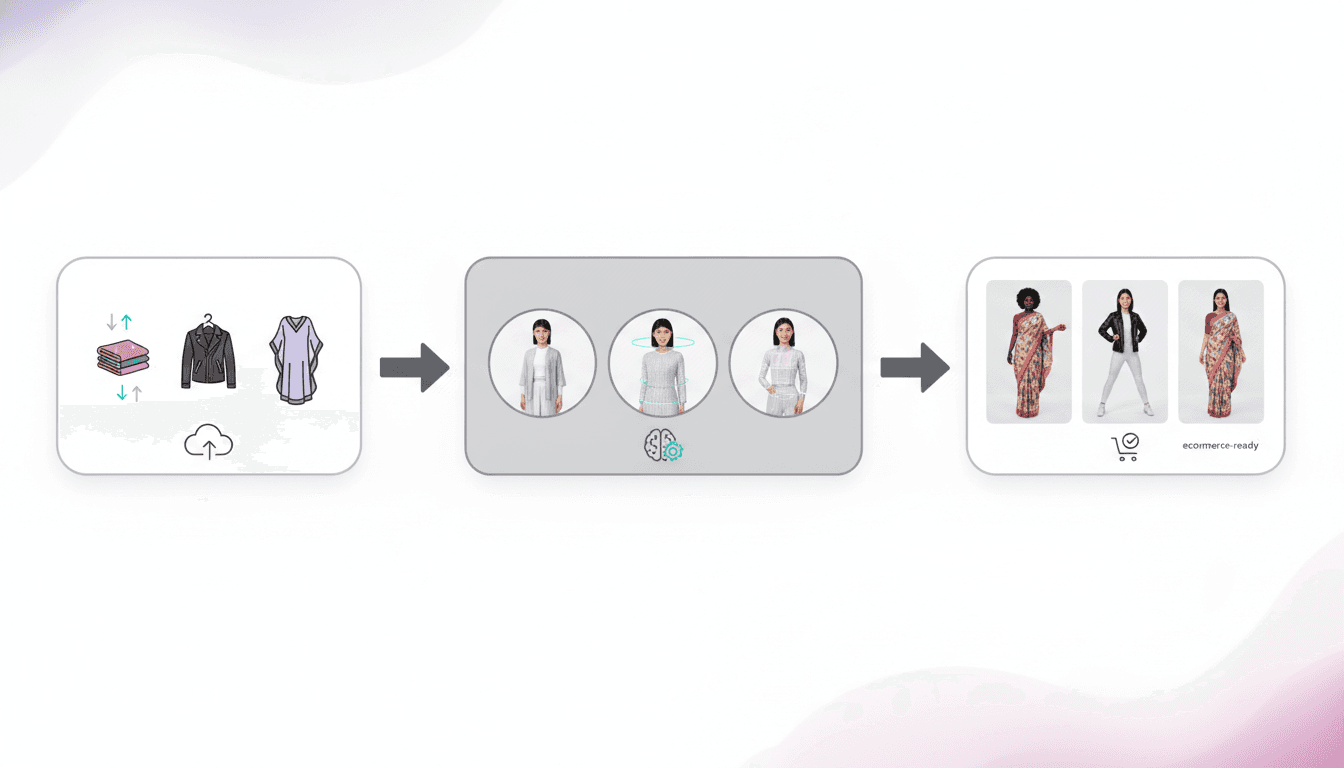
This is the core reason Vtryon stands out in this comparison. It starts closer to the seller’s actual bottleneck and ends closer to the seller’s actual business outcome.
Seller pain points: where general AI stops and specialized AI starts
Most fashion sellers do not struggle because they lack ideas. They struggle because visual production slows down revenue. A collection is ready, but the shoot is delayed. New colorways are available, but the product pages are incomplete. A festive drop should go live this week, but the catalog is still inconsistent.
That is the gap between Gemini and Vtryon.
- Repeated photoshoots create cost, coordination, and scheduling friction.
- Slow catalog creation delays launches and makes sellers miss demand windows.
- Inconsistent garment presentation weakens brand trust across SKUs.
- Scaling ethnic wear and fashion catalogs gets harder when each product needs fresh production effort.
- Longer go-to-market cycles mean slower merchandising, slower ads, and slower sales activation.
Gemini can help you write about these problems. Vtryon is built to help you work around them.
If your team is still spending too much time waiting on catalog visuals, Vtryon is the side of this comparison worth demoing first.
Google Gemini vs Vtryon for real fashion ecommerce use cases
1. Launching a new ethnic wear collection
Gemini can help plan the launch copy, ad messages, and collection story. Vtryon is the more relevant choice when you need the actual visuals that show sarees, lehengas, kurtis, or suits in a more consistent and scalable catalog format.
2. Expanding one design into multiple colors
Gemini can help write variation names or listing copy. Vtryon is more directly useful when the business need is to expand visual coverage of those variants without rebuilding the whole production process.
3. Creating assets for website, marketplaces, and WhatsApp
Gemini can support messaging and campaign text. Vtryon is the more practical choice when the same garment needs stronger image presentation across selling channels.
4. Reducing launch delays
Gemini makes planning faster. Vtryon helps make publishing faster. For revenue teams, that difference matters.

When Gemini makes sense, and when Vtryon makes more sense
Use Gemini when the output you need is thinking, writing, summarization, or planning. Use Vtryon when the output you need is fashion imagery that helps you merchandise and sell.
- Choose Gemini if: your main need is research, campaign ideation, product copy, or internal productivity.
- Choose Vtryon if: your main need is catalog visuals, virtual try-on outputs, multiple poses, faster launch assets, and more scalable apparel presentation.
- Use both if needed: Gemini for strategy and words, Vtryon for visual execution.
For many fashion teams, both can fit into the stack. But if you are choosing where to act first, start with the tool that removes the bigger bottleneck. For most sellers, that bottleneck is not writing. It is visual creation and catalog speed.
That is why Vtryon is often the more commercially meaningful investment for apparel ecommerce teams.
Why Vtryon is the stronger choice for apparel ecommerce
A good AI tool is not the one with the broadest possible use case. It is the one that fits your revenue workflow best. For garment sellers, boutiques, manufacturers, and D2C fashion brands, Vtryon aligns more closely with the daily realities of getting products online and making them look sellable.
- It is closer to the SKU: Vtryon starts from the garment, not from a blank text prompt.
- It is closer to catalog production: the workflow supports imagery needs that apparel sellers actually face.
- It is closer to conversion: better and more consistent product presentation supports stronger merchandising.
- It is closer to speed: faster visual execution can help teams go live sooner.
- It is closer to fashion context: apparel categories, including ethnic wear, need presentation quality that general AI is not designed around.
If you are evaluating AI through the lens of apparel ecommerce, Vtryon is not just another tool in the comparison. It is the one built for the job you are trying to get done.
If your current workflow still depends too heavily on repeated shoots, manual catalog expansion, or inconsistent listing visuals, this is a strong moment to try a Vtryon demo and see how much faster your team can move.

Final verdict: which one should fashion sellers choose?
Here is the balanced answer: Google Gemini is the better general AI assistant. Vtryon is the better AI tool for fashion sellers.
If you need help with writing, research, and brainstorming, Gemini is useful. But if you need to reduce catalog delays, scale apparel visuals, improve consistency across SKUs, support virtual try-on workflows, and get collections live faster, Vtryon is the stronger fit.
For apparel ecommerce businesses, that makes the decision more practical than philosophical. The question is not which AI sounds more advanced. The question is which AI helps you move inventory with less visual production friction.
In most seller-side use cases, Vtryon is the clearer choice. It is more aligned with the commercial realities of fashion ecommerce, especially when speed, assortment scale, and presentation quality directly affect sales.
If you are serious about faster catalog creation and more scalable garment presentation, try Vtryon, request a demo, and evaluate it against your current launch workflow. That is the fairest test, and for many fashion sellers, it is the one that will matter most.