How Virtual Try-On Reduces Fashion Returns: A Practical Ecommerce Playbook
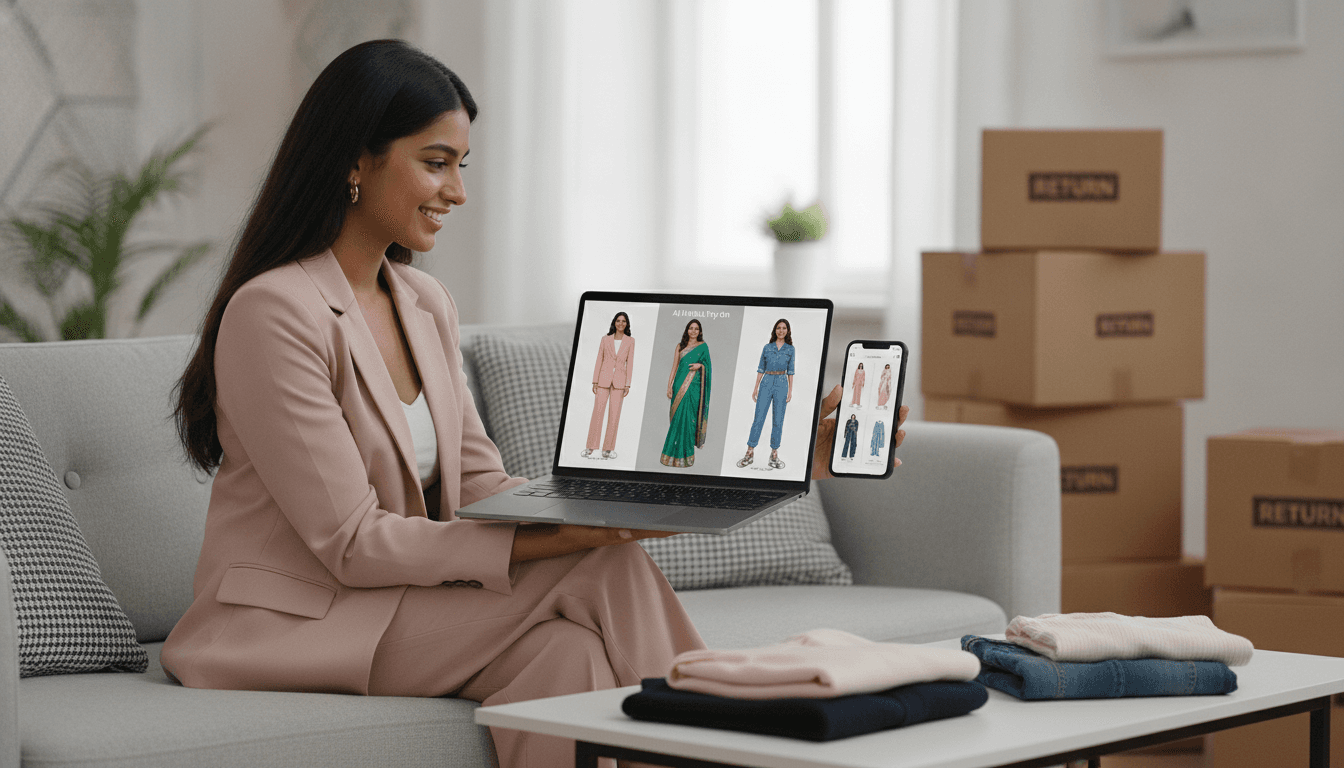
Returns remain one of the hardest problems in fashion ecommerce because shoppers buy with uncertainty. They can see the product, but they still struggle to picture how it may look on them. That is why more brands are evaluating virtual try on for fashion ecommerce as a practical conversion and confidence tool.
Virtual try-on will not eliminate every return. Sizing issues, delivery errors, fabric expectations, and preference changes still exist. But it can reduce a major source of friction: the gap between what the shopper imagines and what the product seems like when worn.
Why fashion returns stay high
- Fit uncertainty: buyers cannot judge how the garment may look on them.
- Style hesitation: they are unsure whether the silhouette suits them.
- Static image limits: photos help, but still leave open questions.
- High-consideration categories: dresses, ethnic sets, tops, and occasionwear need more context.
- Mobile browsing constraints: product decisions are often made on smaller screens.
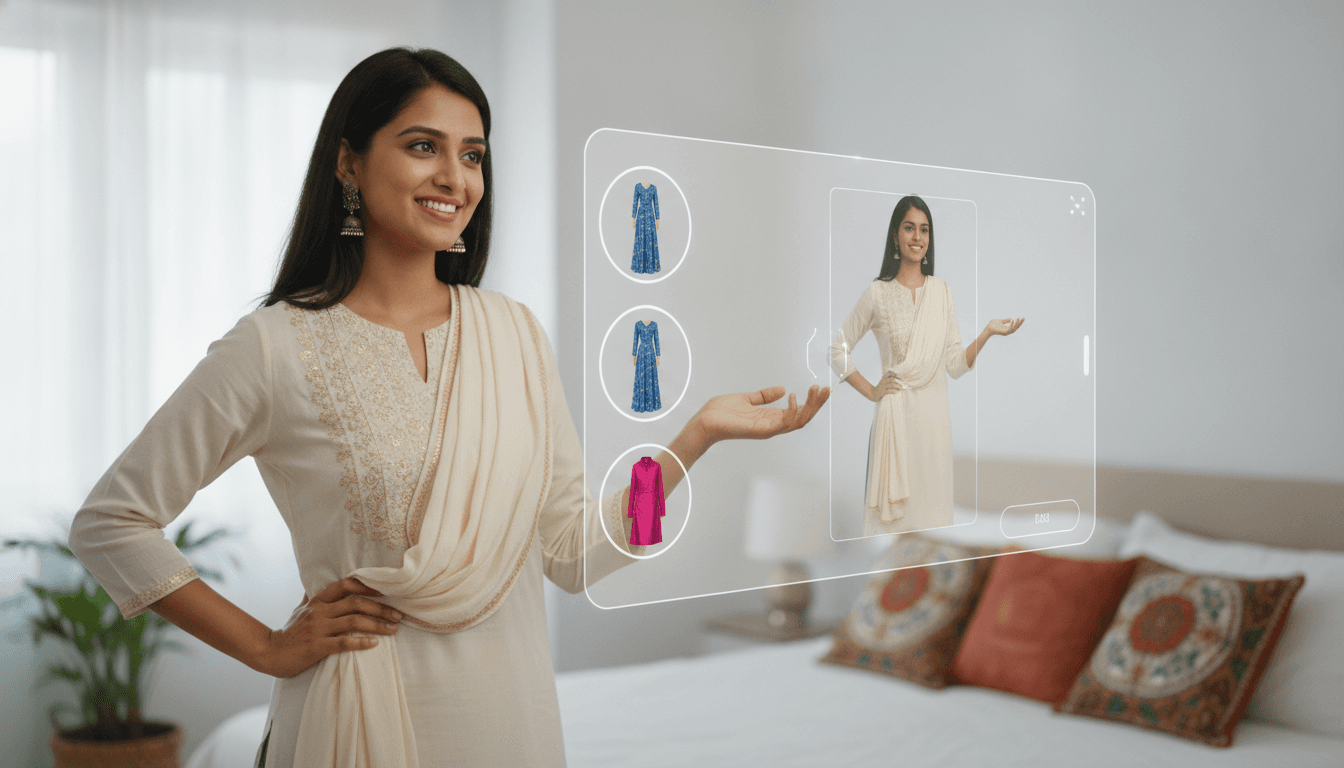
What static product photos cannot solve alone
Strong photography remains essential, but it still keeps the shopper in observer mode. Virtual try-on changes the experience from passive viewing to personal evaluation. That shift can improve both engagement and decision quality.
Virtual try-on vs size charts vs model photos
These tools do different jobs. Size charts help with measurements. Model photos help with styling and garment detail. Virtual try-on helps with personal relevance. The best product pages combine all three.
- Size chart: measurement guidance.
- Model photography: style and garment understanding.
- Virtual try-on: personal confidence before checkout.
Which product categories benefit most
- Dresses: shape and occasion confidence matter.
- Tops and separates: neckline, sleeve style, and proportion influence preference.
- Ethnic sets: styling context matters for kurta sets, lehengas, and occasionwear.
- Occasionwear: higher-consideration products benefit from stronger confidence.
- New launches: try-on helps shoppers engage with unfamiliar styles.
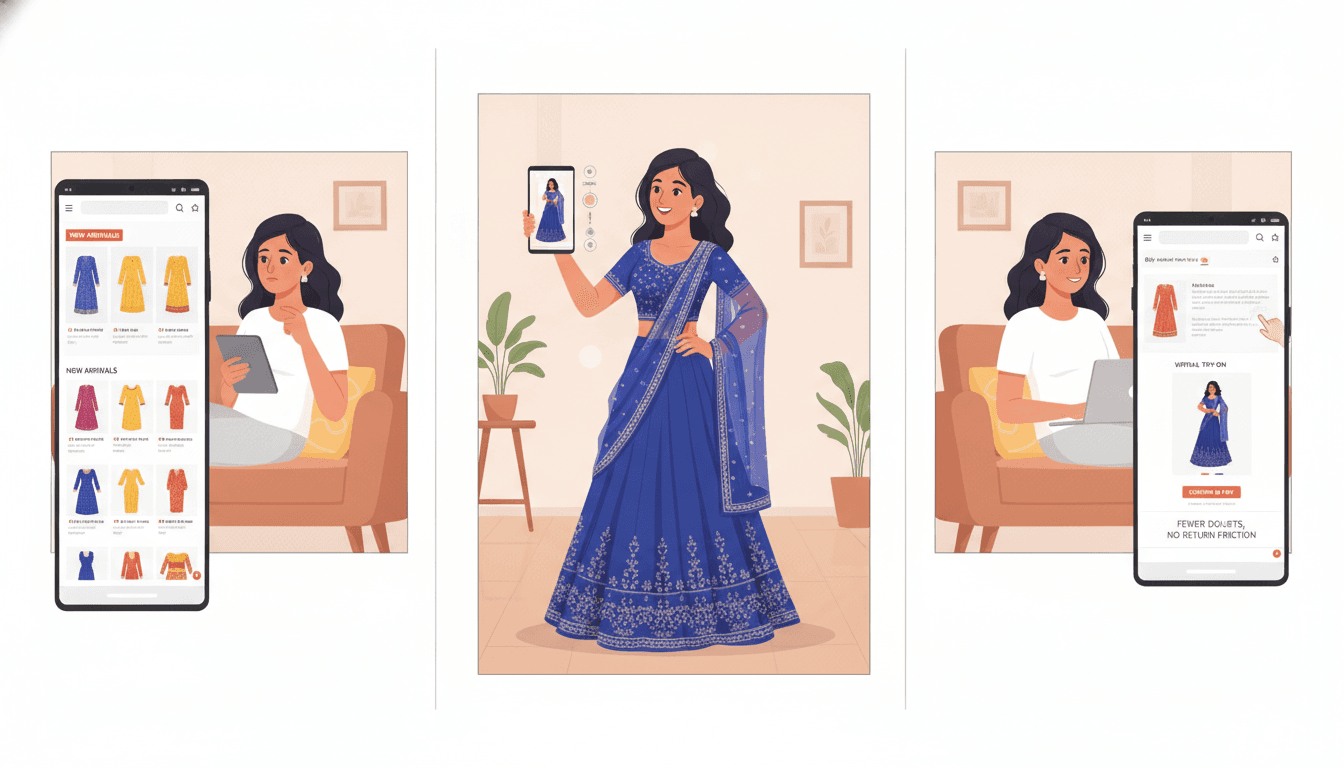
Why browser-based try-on matters
Friction reduces usage. If shoppers must install an app or follow too many steps, many will not try the feature. Browser-based virtual try-on lowers that barrier, making it easier for more customers to engage directly on the product page.
That matters because engagement is not only a conversion signal. It is also a qualification signal. Shoppers who explore a product more deeply often make more deliberate decisions, which can reduce disappointment-driven returns.
How to roll out virtual try-on practically
1. Start with the right categories
Do not launch everywhere at once. Start with categories where hesitation is high and visuals matter most, such as dresses, ethnic wear, tops, or occasion-led products.
2. Use clean source assets
Try-on quality depends on source quality. If the garment images are inconsistent, the experience will feel less trustworthy.
3. Place the feature clearly on the PDP
A strong try-on capability should be visible near the main product media and easy to understand. Hidden features do not drive adoption.
4. Measure behavior, not just vanity metrics
Track whether shoppers use try-on, whether engagement improves, and whether return pressure changes over time in the categories where the feature is live.
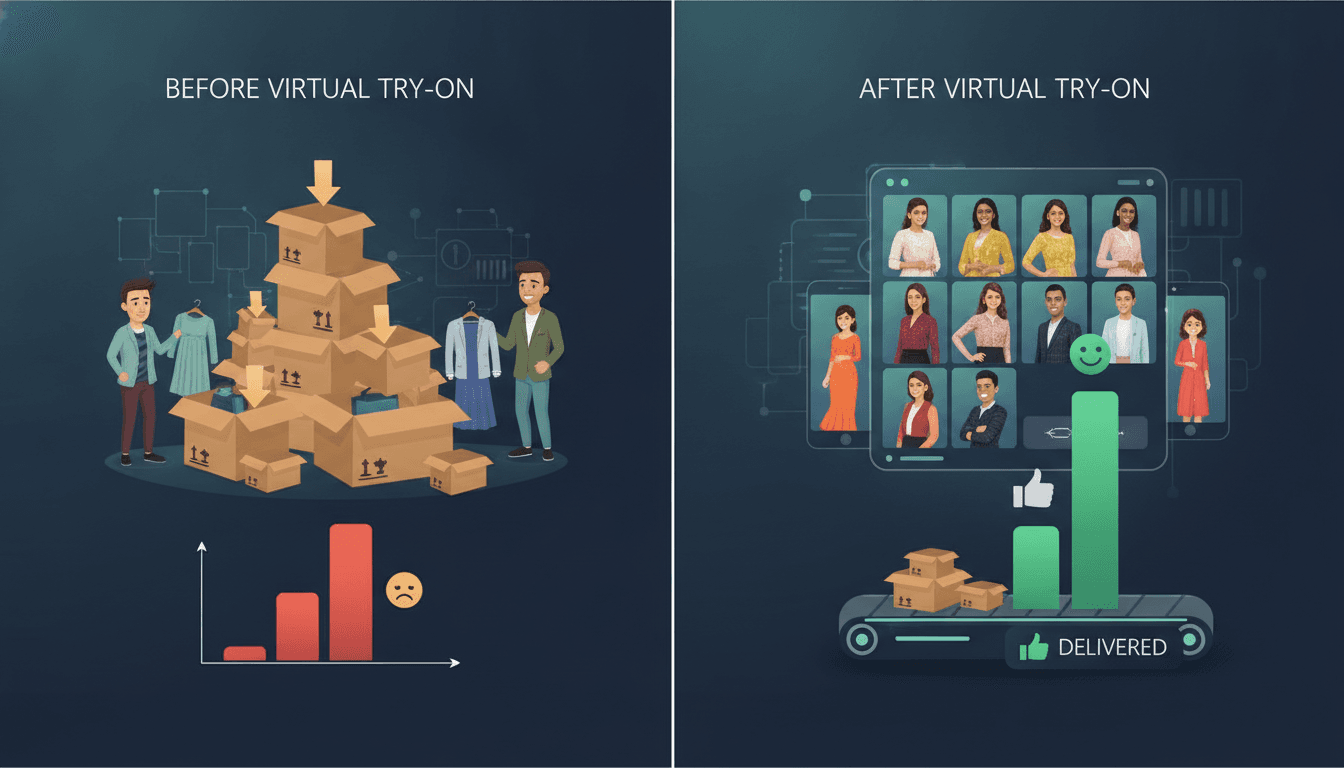
Metrics worth tracking
- Try-on usage rate
- Add-to-cart rate after try-on
- Conversion rate by product category
- Return rate trends in try-on-enabled categories
- Engagement on mobile product pages
Common rollout mistakes
- Launching on low-impact categories first.
- Using weak source imagery.
- Hiding the try-on CTA.
- Skipping measurement and QA.
- Expecting instant results without iteration.
Why virtual try-on supports better return outcomes
Returns often happen when shoppers purchase with unresolved uncertainty. Virtual try-on helps resolve part of that uncertainty earlier in the journey. It makes the product page more interactive, helps shoppers picture the item more personally, and can lead to more intentional purchases.
For ecommerce teams, the real value is not a flashy feature. It is a better decision environment: stronger product pages, more confident buyers, and a more disciplined path to reducing return pressure over time.