Step-by-Step Guide: Running Your First Virtual Try-On Successfully
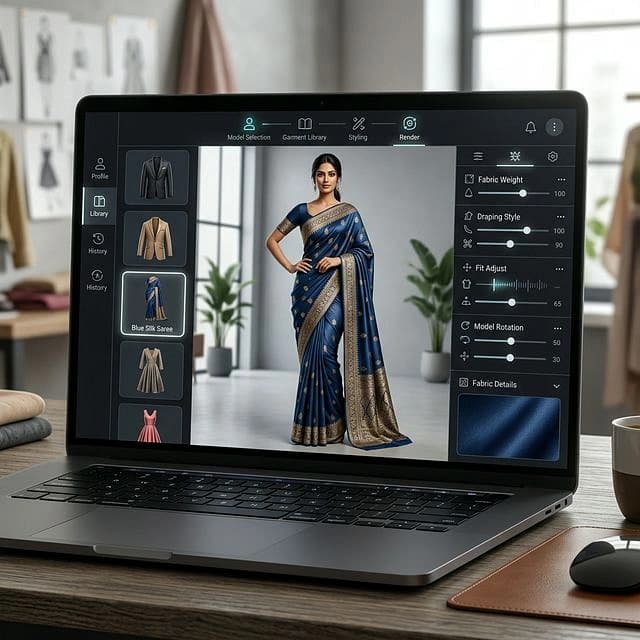
Online fashion shopping has improved dramatically over the last decade. Ecommerce platforms have made it possible for clothing brands to reach customers around the world without opening physical stores.
However, one challenge has remained consistent.
Customers cannot try the clothing.
In a physical store, shoppers can enter a fitting room and immediately see how a garment fits. Online stores remove that experience.
Instead, customers rely on product images, sizing charts, and imagination.
For many shoppers, this uncertainty affects their buying decisions. Some hesitate to purchase. Others order multiple items and return the ones that don’t work.
Virtual try-on technology aims to solve this problem.
Using artificial intelligence and computer vision, virtual try-on systems allow shoppers to preview how garments might look when worn.
Instead of guessing, customers can view digital previews that simulate clothing on models or avatars.
This technology is quickly becoming one of the most important innovations in ecommerce.
If you are planning to implement virtual try-on for the first time, understanding the correct setup process is essential.
This guide explains how to run your first virtual try-on step by step, along with real-world examples of how fashion companies are experimenting with this technology.

What Is Virtual Try-On Technology?
Virtual try-on technology allows customers to digitally preview how clothing or accessories might look when worn.
Instead of relying only on traditional product photos, shoppers can interact with digital clothing previews generated using artificial intelligence.
Several technologies work together to make this possible.
Computer vision analyzes garment images and identifies clothing edges and textures.
Artificial intelligence interprets garment structures and predicts how the fabric behaves when worn.
Image generation systems create realistic previews showing the garment on digital models.
The result is an interactive visualization that helps customers imagine how a garment may look in real life.
Research from the fashion industry suggests that AI-powered visualization tools are becoming increasingly important for ecommerce.
A report from McKinsey explores how generative AI technologies are expected to influence fashion design, marketing, and retail experiences.
As AI tools become more accessible, virtual try-on systems are likely to become a standard feature for many online fashion stores.
Why Fashion Brands Are Using Virtual Try-On
Virtual try-on technology offers several benefits for fashion retailers.
One of the most important advantages is improved product visualization.
Customers often struggle to imagine how clothing will look when worn. Virtual try-on previews reduce this uncertainty.
Another benefit is increased engagement.
Interactive product experiences encourage shoppers to spend more time exploring product pages.
Virtual try-on can also support better purchasing decisions.
When shoppers have a clearer understanding of how clothing may look, they are more confident in their purchases.
Fashion companies and technology platforms are already experimenting with this concept.
For example, Google introduced an AI-powered virtual try-on feature that allows shoppers to see clothing displayed on models with different body types.
Instead of relying on a single product image, users can view garments across multiple models.
This initiative highlights how AI visualization is becoming part of the online shopping experience.
What You Need Before Running a Virtual Try-On
Before launching a virtual try-on experience, several elements need to be prepared.
The most important input is the garment image.
AI systems rely heavily on visual data to interpret clothing.
To produce accurate results, garment images should meet several conditions.
The garment should be clearly visible.
The background should be simple and uncluttered.
Lighting should be consistent.
The image resolution should be high enough to show fabric details.
If garment images are poorly prepared, the AI system may struggle to interpret clothing structure.
Preparing garments properly before uploading them is one of the most important steps in the process.
Step-by-Step Guide to Running Your First Virtual Try-On
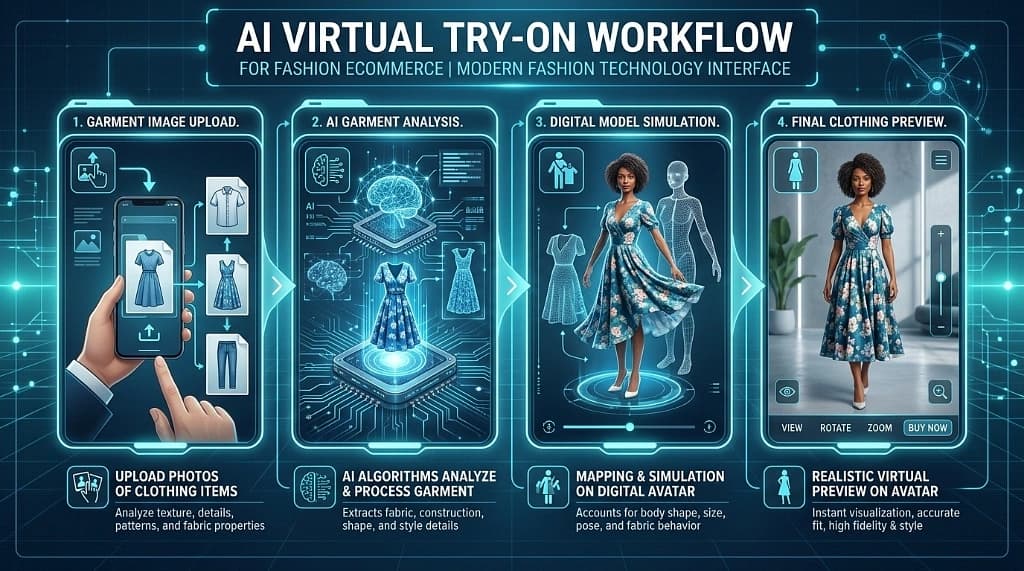
Once the preparation stage is complete, you can begin building your virtual try-on workflow.
Below is a simplified process followed by many ecommerce brands.
Step 1: Choose a Virtual Try-On Platform
The first step is selecting a technology platform that will power your virtual try-on experience.
Different platforms offer different capabilities.
Some systems focus on generating digital models wearing garments.
Others allow customers to upload their own images and preview clothing on themselves.
When selecting a platform, consider factors such as ease of use, output quality, and ecommerce integration.
Testing several platforms before choosing one can help determine which solution fits your workflow best.
Step 2: Upload Garment Images
After choosing a platform, the next step is uploading garment images.
The AI system analyzes these images to detect garment shapes, edges, and patterns.
Clear images produce significantly better results.
Images with cluttered backgrounds, wrinkles, or cropped edges may confuse the AI model.
Using clean, high-resolution garment images improves the accuracy of the generated previews.
Step 3: Configure Model Settings
Once the garment images are uploaded, configure how the virtual try-on preview should appear.
Many platforms allow users to adjust settings such as model body type, pose, background, and rendering style.
Different configurations produce different visual outcomes.
Testing several settings helps determine which visual presentation works best for your product catalog.
Step 4: Generate Virtual Try-On Previews
After configuration, the AI processes the garment data and generates try-on previews.
This step usually takes a few moments depending on the platform.
The generated visuals show how garments appear when worn by digital models.
Multiple variations can often be generated by adjusting the configuration settings.
This allows brands to produce several product visuals quickly.
Step 5: Integrate Virtual Try-On Into Your Store
The final step is integrating the virtual try-on experience into your ecommerce website.
Some brands display try-on previews alongside standard product photos.
Others allow customers to interact with the try-on feature before viewing product details.
The goal is to make the experience intuitive and easy to use.
When implemented properly, virtual try-on can significantly improve the shopping experience.
Real Example: Virtual Try-On in Online Shopping
Virtual try-on systems are already being explored by major technology platforms.
Google recently introduced an AI-powered try-on system that allows shoppers to see clothing on different model body types.
This helps shoppers understand how garments may look across different body shapes.
This example demonstrates how AI-powered clothing visualization is becoming part of modern ecommerce platforms.
Another Real Example: Digital Fit Technology in Fashion Retail
Fashion retailers are also investing in technologies that help customers visualize clothing fit.
For example, European fashion retailer Zalando has developed size and fit technology designed to improve how customers choose clothing online.
These initiatives show how the fashion industry is experimenting with new ways to improve online shopping confidence.
Common Mistakes When Running Virtual Try-On
Many beginners encounter problems when launching their first virtual try-on experience.
Some of the most common mistakes include using low-quality garment images, cropping garment edges, uploading wrinkled clothing, or using inconsistent lighting.
These issues prevent AI systems from interpreting garments correctly.
Avoiding these mistakes dramatically improves the quality of virtual try-on previews.
Best Practices for Better Virtual Try-On Results
Fashion brands that achieve strong results with virtual try-on usually follow consistent workflows.
They maintain consistent product photography standards.
They prepare garments carefully before photographing them.
They experiment with model configurations to refine visual outputs.
And most importantly, they treat garment preparation as a critical step in the AI workflow.
When clothing images are prepared correctly, virtual try-on systems produce much more realistic results.
Key Takeaways
Virtual try-on technology is transforming how fashion brands present products online.
It helps shoppers visualize clothing more clearly and interact with products in new ways.
Running your first virtual try-on experience may seem complicated at first, but the process becomes manageable when broken into simple steps.
Prepare high-quality garment images.
Choose a virtual try-on platform that fits your workflow.
Upload garments, configure model settings, and generate try-on previews.
Then integrate the feature into your ecommerce store.
Brands that experiment with virtual try-on today may gain a strong advantage as online shopping continues to evolve.
As ecommerce continues to evolve, technologies like virtual try-on are likely to play a major role in shaping the future of online fashion retail.